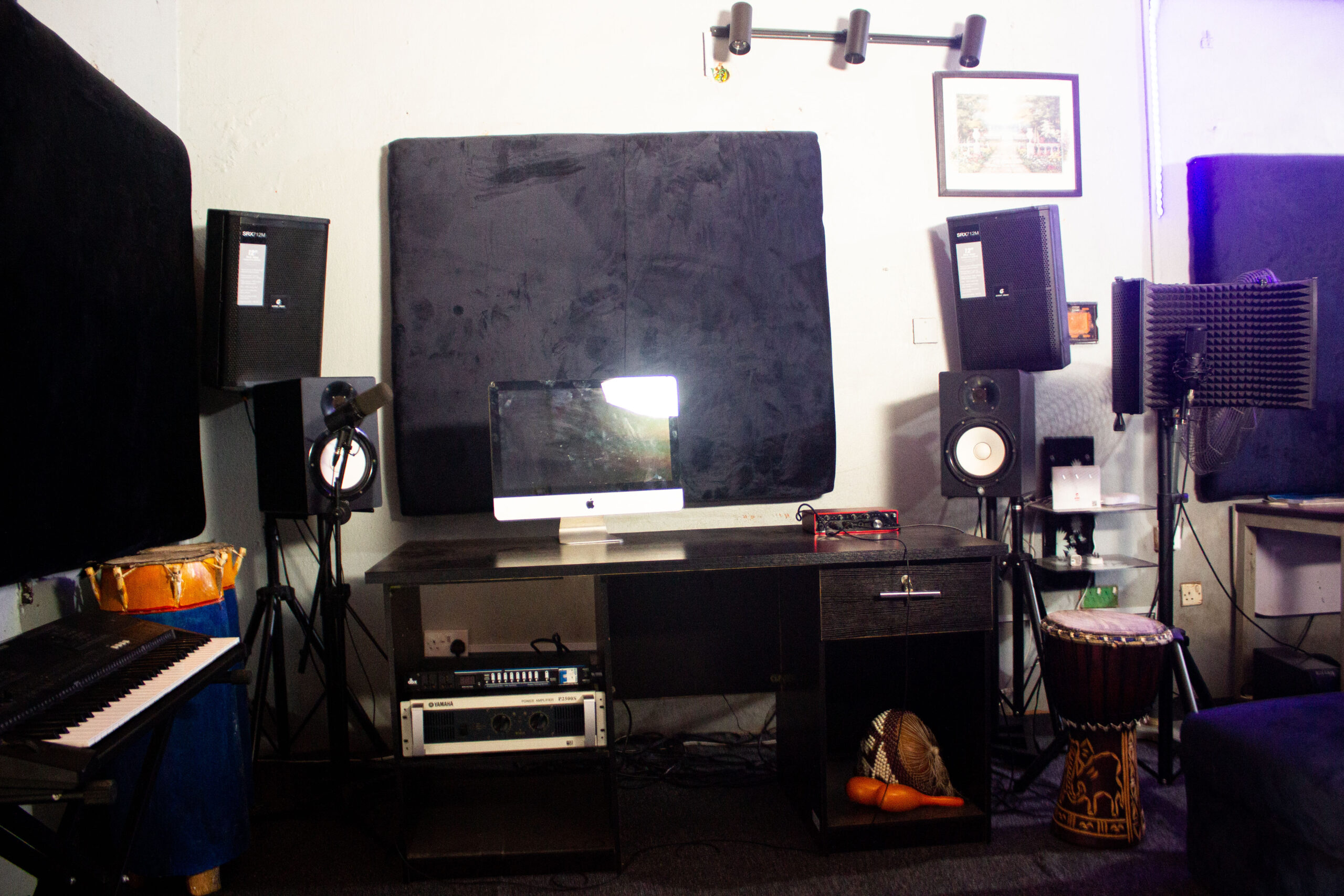
Sound design is the art and practice of creating sounds for various needs, such as sound recording, filmmaking, game development, and post-production.
A good sound design can transport audiences into the world of a story, making the experience more engaging and immersive with the help of sound effects, music, and voiceovers. The resultant can evoke emotions, creating a deeper connection with the audience.
We specialize in all aspects of audio post-production, and this involves Sound Effects Editing, Dialogue, Foley, Ambience Design, Music Score Recording, and mixing of audio tracks, using a perfect blend of the immersive sound design elements in the mix to ensure a quality Stereo, 5.1.4, 7.1.4, surround sound audio output with a different approach than most sound designers.
Following the online digital platform specification, we have a breakdown of our audio specification for a better viewer experience and client patronage.

NEAR-FIELD AUDIO PREQUISITES FOR MIX FACILITIES
We set the average loudness at −27 LKFS with a tolerance of ±2 LU dialogue-gated. Peak doesn’t exceed −2 dB True Peak
Mixed audio is inherent to the source, such as audio in an IMF, QuickTime, or Dolby Atmos® BWAV ADM container.
Interleaved secondary audio WAV deliveries
Sample Rate & Bit Depth
- 48 kHz / 24-bit for Original Language Mix or M&E Mix – applies to stems and mix masters.
- 48 kHz / 16-bit or 24-bit for Secondary Language or Audio Description
Our audio is recorded and delivered in sync with the picture at the native project frame rate. Our audio deliverables match the camera and picture post-production frame rate.
2.1 NEAR-FIELD ATMOS® MIX – MASTERING & ARCHIVE – ORIGINAL LANGUAGE VERSION
Our Dolby Atmos® Original Language Home Mix meets the following requirements:
- Mixed in a 7.1.4 room
- Atmos® delivered via IMF (IAB) supports 23.976, 24, 25, and 30 frames per second.
- A Near-field mix. The most common monitoring levels for near field at 79dB or 82dB SPL.
- Conforms to Netflix loudness spec(−27LKFS ±/-2 LU 1770-1 dialog-gated).
- All beds and objects encoded are always audible. A print master is also a composite of all bed materials or multiple beds.
2.2 NEAR-FIELD 5.1 SURROUND MIX – MASTERING AND ARCHIVE – ORIGINAL LANGUAGE VERSION
- Set the standard reference level for mixing to 79 dB SPL or 82 dB SPL.
- Meet a −27 LKFS (+/-2 LU) dialogue loudness using ITU-R BS.1770-1 measured over the entire program.
- Do not exceed +18 dBu (−2 dBFS) maximum level (true-peak) over reference of -20 dBFS, achieved by peak limiting and not lowering the mix level.
- For the original version, we provide 5.1 Dialog, Music, and Effects stems that equal the 5.1 mix when combined.
2.3 NEAR-FIELD 2.0 STEREO MIX – MASTERING AND ARCHIVE – ORIGINAL LANGUAGE VERSION
- We use 79dB SPL or 82dB SPL as our standard reference level for mixing.
- We do not exceed +18dBu (−2 dBFS) maximum level (true-peak) over reference of -20dbfs, achieved by peak limiting and not lowering the mix level.
